

These outlets are the ones you’re most likely to have in your house.
Ok, so let’s talk about the types of outlets you’ll find in your house. For the most part, you are going to see 120 volts, 15 amp, and 20 amp. And 220 2-wire, 3-wire, and four-wire types.
Please remember not all 220-volt outlets use a neutral (white) wire. To give you a general idea, let’s say you just bought an air compressor from Home Depot. It requires 220 volts but the plug only has three prongs. You’ll have the two that look alike and will be the two separate hots and the other round looking on would be the ground. And of course, more than likely it would be 20 amp.

220 volts 20 amps
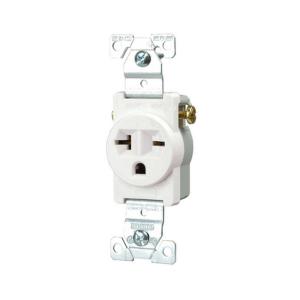
This is a 220v 20 amp outlet as shown in the how-to 220-volt outlet video likely to be used for larger power tools in your garage or shop or perhaps a wall air conditioner.
220 volts 30 amps
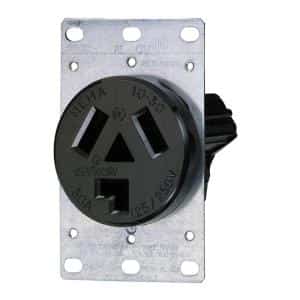
Wire Connections for X Y W 240 Volt Receptacle Dryer Outlets The Black Wire attaches to Outlet Terminal X The Red Wire attaches to Outlet Terminal Y The White Neutral or Green wire or Ground wire attaches to Outlet Terminal W
Commonly known as a dryer outlet. Of course, used for a clothes dryer. This would be used in a wall box with a cover plate (flush mount)
220 volt 50 amp outlets

In a house, these would be considered the big boys. You’ll find one of these in newer homes for a stove-oven combo. This is a 4-wire outlet. See my video on how to install one of these. This is a 50 amp 220 4 wire. Better known as a stove or oven outlet Keep in mind, although you might have an oven, dryer, stove, or whatever. It may not have an outlet at all. It could be hard-wired into the appliance. And that’s fine, lots of bigger commercial appliances are known to be wired that way. Tip… Red is hot (110 volts), and black is also hot (110 volts) = 220 volts. White is neutral and is the returned path back to the transformer on the road. The ground is just that. Ground to each and is always used on anything electric. Unless of course, your house is very old in which case should be updated just for pure safety.
Surface Mount 220v outlet
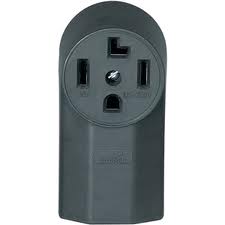
This is a surface mount 220v outlet. You would find these in older homes where the installation came after the house was built.
3 wire stove receptacle
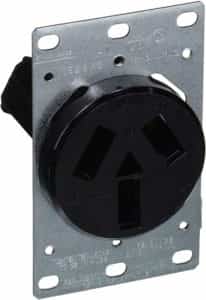

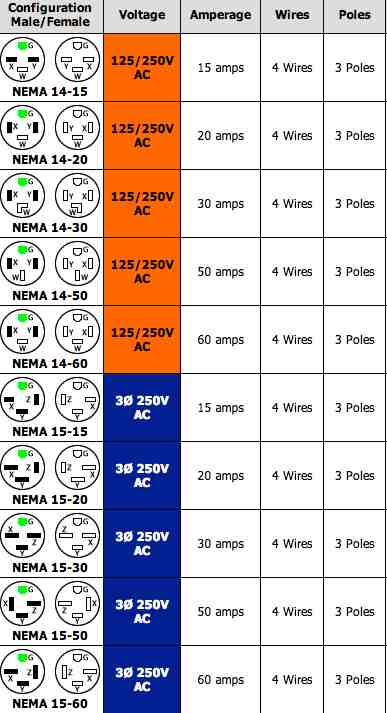
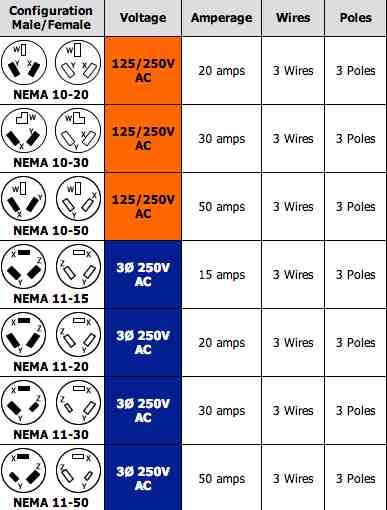
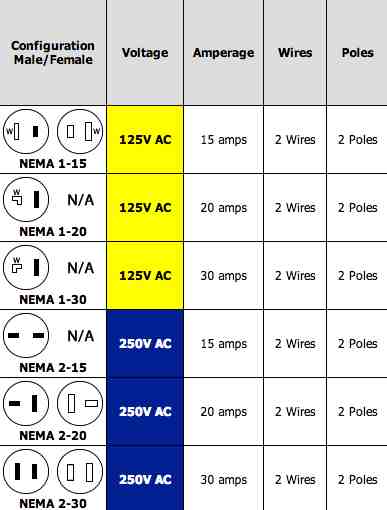
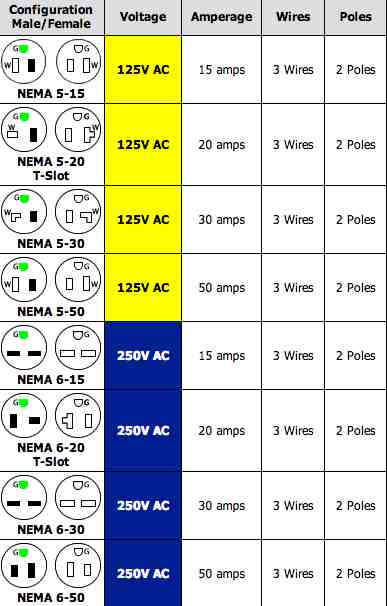
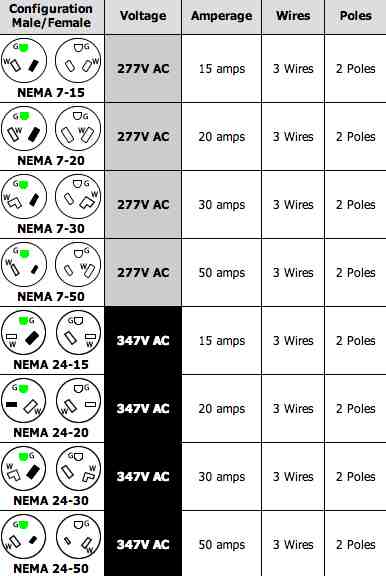
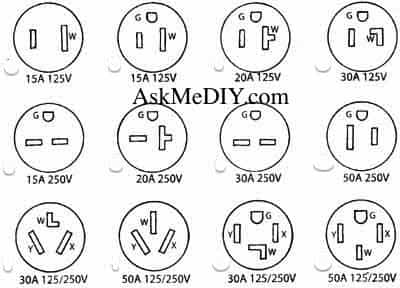
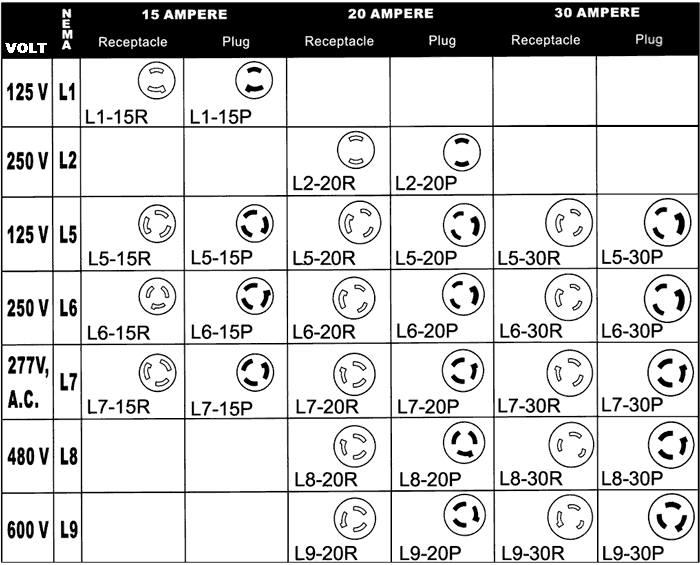
Click on the above images to make them bigger
In conclusion, understanding the various outlet configurations in your home is essential for proper electrical safety and functionality. Most residential spaces are equipped with 120-volt outlets rated for 15 and 20 amps.
It’s important to recognize the significance of 220-volt options, including 2-wire, 3-wire, and 4-wire configurations. Familiarizing yourself with these types can help you make informed decisions regarding appliance connections and electrical upgrades.
We invite you to share your thoughts and experiences related to 220-volt plug receptacle configurations in the comments section below. Your insights could be beneficial to others navigating these electrical considerations.
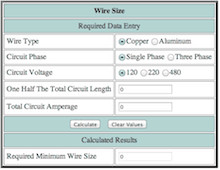
Wire Size Calculator
Use this calculator to help you determine what size wire to use.

Comments ( 88 )
I just bought an Air conditioner that has a 230 volt 30 amp plug on it. My old failed ac unit has a 220 15 amp outlet for it. All though similar the 30 amp plug is a lot bigger. Can I put a different outlet in to accept the 30 amp plug or is it a lot more than that?
Yes if your new AC is really a 30 amp than you will need to change the breaker and wire. Otherwise you will have big time issues. Check the amp ratings on the unit just to make sure.
Hello. So I have a 220v/50a plug in my garage. The one you called “big boy”. I recently bought a bandsaw that is 10a at 220v. So I bought a plug that matches the 220v outlet and wired it. It works fine and I have no issues. Should I have done this? Also, I want to buy a dust collector that is a 240v/9a. Can I replace the plug to the dust collector to match the 220v/50a outlet?
It’s over kill, but hey whatever makes the connections and does it right is fine. All of my shop equipment is 20amp with 20 amp plugs.
Hi my daughter just moved into her new home three days ago. She has purchased a three prong dryer. Problem is the outlet is not made for that. It’s a weird outlet 220? frustrated what to do?
I’m sure it’s 220. But they are not all the same as you now know. The easiest way would be to just replace the plug on the dryer. Send me some pictures if you like.
I have a generator with a NEMA L14-30-R 30A 125/250volt receptacle and it has 4 curved plugs on it and one is “L” shaped I want to know if I can use a 220amp 20volt like the first picture here. I could not find a picture of the 125/250v 4 plug in any of the NEMA straight blade charts on here. I went to the NEMA site and found it on the curved blades charts but it has no information on whether I can change this to the 220v 20amp straight receptacle.
I have pictures but I don’t know how to put them on here.
Thank you for any help!
Stove plug is 3 prong wall plug there is 4. I have a 3 prong wall plug can I just change out the covers or do I need to change the whole thing?
Either way would be fine. I may chose to change the outlet.
Looking for a receptacle for a new AC. 25amp 240 avc. 2 blade W a round ground. Where can I pick one up at?
Home Depot or any electrical supply.
Can i plug a 15 amp 230 ac with 6-15p plug into a 20 amp 6-20p outlet
Sure thing
We have a outlet with standard round hole on the right horizontal on the left and normal ground. Is this used for 220v. Our printer co says we are having 220 yet his plug is the same.
Sounds like it me. Email me a picture of it. dom@askmediy.com
Have a hole in my bathroom ceiling that started out the size of a dime…now the size of my fist. This was caused by a leaky roof which has since been repaired however how to I patch such a large hole as the surrounding plaster seems brittle and weak! Unsure if it can accommodate a plaster screen patch! Help!
You would want to cut out a square large enough to where the sheetrock is solid and then use one of my how to repair a large hole in sheetrock.
Can I replace a 6-20r with a 5-20r to reduce voltage?
No, not at all. Your voltage will stay the same
Thanks for your reply, after some reading and volt meter tests I found I need to use only one of the ‘hot’ leads and what looks like a capped off neutral. Really strange, it was a 240 outlet that from the fuse box to end, changed its color codes: White – hot; Black -hot; bare copper; ground or neutral?? to Orange -hot; Blue – hot; White -ground or neutral?? I’m a novice so any advice you could give would be great.
Yeah, be very careful of what you’re doing. 220 is 220. Yes at the outlet end by using just one hot and the neutral will give you 120 volts.